





The city of Salamanca is preparing for one of the most ambitious energy projects in recent years. The future sustainable heating network, driven by the Junta de Castilla y León and the City Council, will supply heating and domestic hot water to approximately 8,900 homes and 75 tertiary buildings, thanks to a large thermal power plant fueled by forest biomass, mainly holm oak wood.
The infrastructure, already considered one of the most relevant energy projects in Castilla y León, will involve an investment of approximately 35 million euros and will be co-financed with European FEDER 2021-2027 funds. The objective is to transform Salamanca's energy model by promoting renewable, sustainable, and local energy.
A unique building to revolutionize heating in Salamanca
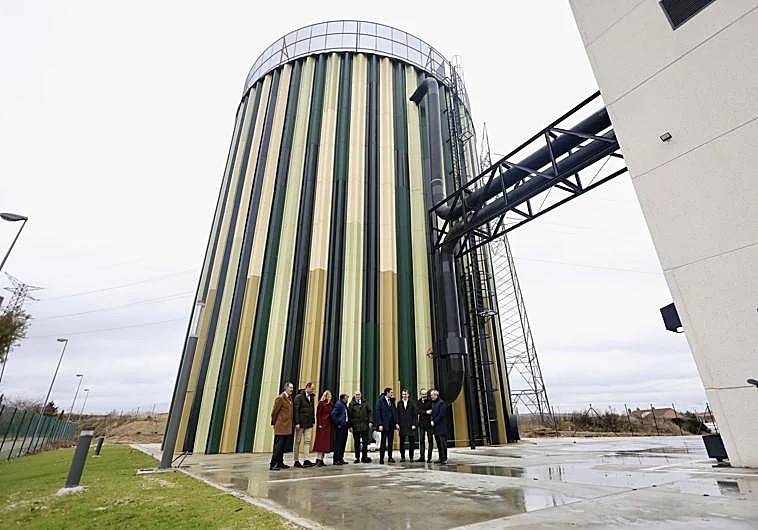
The future power plant will be located on Mariano Rodríguez Sánchez Avenue and will function as the heart of the new urban heating network. The building will house biomass boilers with up to 48 MW of power, capable of generating enough thermal energy to supply thousands of homes and public buildings.
The installation will use forest biomass mainly from holm oak wood and other forest residues, a much more sustainable alternative compared to natural gas or traditional fossil fuels. Additionally, the system will incorporate advanced emission control technologies using multi-cyclones and electrostatic precipitators to minimize environmental impact.
The project also includes a network of more than 50 kilometers of underground pipelines that will distribute heat throughout different neighborhoods of the city.
Which neighborhoods in Salamanca will have access to the new district heating network?
The implementation of this sustainable heating network will be carried out in several phases. The first will reach strategic areas such as:
- Miguel de Unamuno Campus
- Salamanca University Hospital
- Huerta Otea
- The Platinum
- Hospital District
- Saint Bernard
Later, the system will be extended to other neighborhoods such as:
- Pizarrales
- White Neighborhood
- El Carmen
- Cappuccinos
- Vidal
- West
With this, Salamanca aims to become a national benchmark in biomass-based urban heating networks.
Energy saving and emissions reduction
One of the main benefits of the project will be economic savings for users. According to initial forecasts, each connected home could save around 350 euros annually on heating and hot water.
Additionally, the elimination of thousands of individual boilers will significantly reduce pollutant emissions and improve air quality in Salamanca. The project aims to prevent the emission of approximately 39,000 tons of CO2 per year.
The initiative will also have a significant economic and labor impact, as it will generate employment in the construction and maintenance of the network, as well as in forestry and biomass logistics in rural areas of Castilla y León.
Salamanca bets on a more sustainable energy model
The creation of this large heating network is a decisive step towards a more efficient urban model that is less dependent on fossil fuels. Salamanca is thus joining other European cities that already use centralized urban heating systems powered by renewable energy.
From the Board, they emphasize that this type of project allows for the use of local forest resources, contributes to the cleaning of forests, and helps prevent forest fires, while also boosting the rural economy.
The works for the heat plant and distribution network are expected to begin in the second half of 2026.
Salamanca positions itself as a leader in energy innovation
The future sustainable heating network will put Salamanca among the most advanced Spanish cities in energy transition. The project combines sustainability, economic savings, and urban modernization through a system capable of supplying thousands of homes with renewable energy produced from natural resources in the surrounding area.
With this commitment to biomass and centralized heating, Salamanca takes an important step towards a more efficient, less polluting city, prepared for future energy challenges.