





The EU approves new rules to promote the circular economy in the automobile
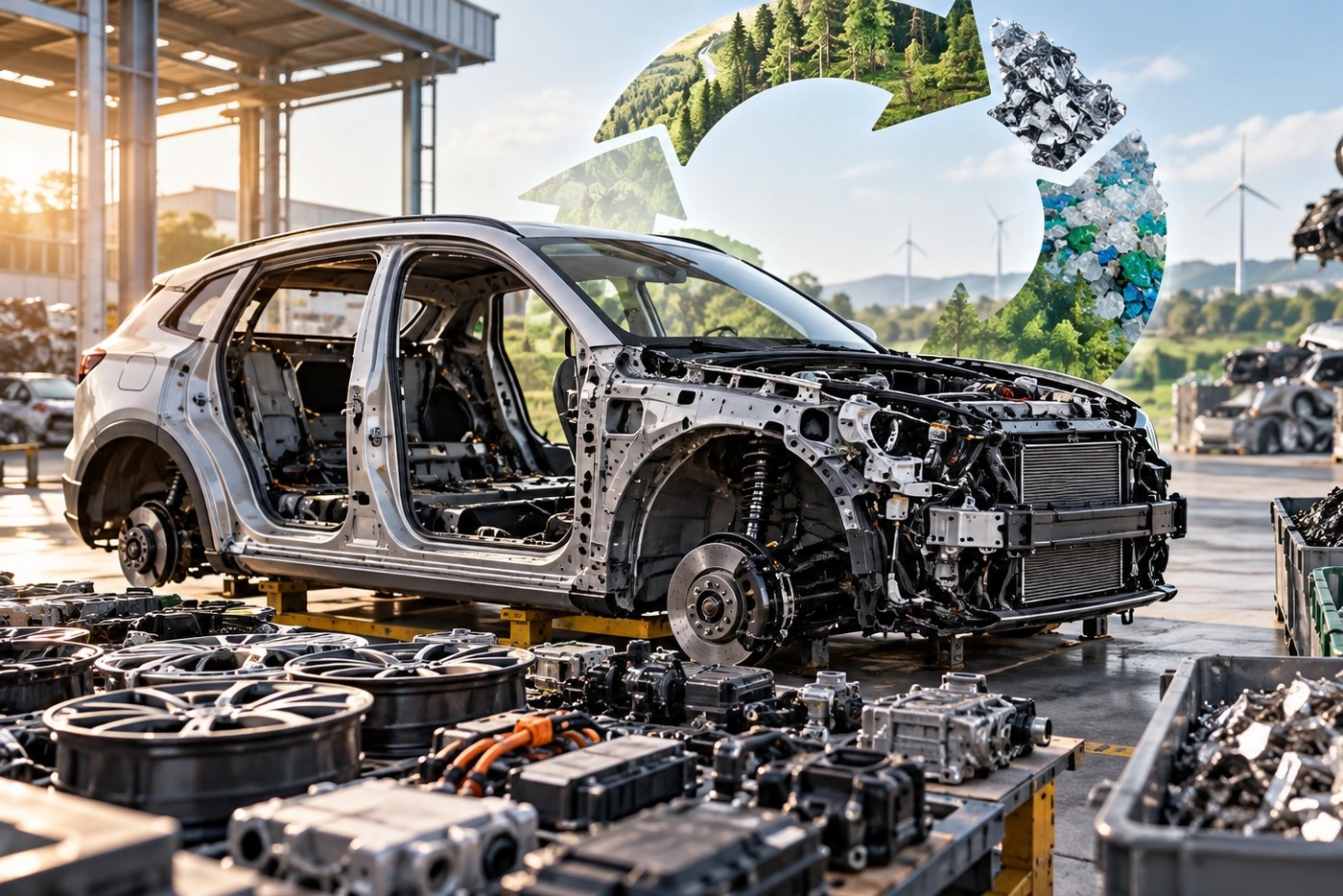
The European Union has approved a new regulation to transform the way vehicles are designed, manufactured, reused and recycled. The standard introduces mandatory recycled plastic targets in new cars, reinforces manufacturers' responsibility throughout the vehicle's life cycle and establishes stricter controls on cars reaching the end of their useful life.
Regulation (EU) 2026/1738, published in the Official Journal of the European Union on 24 July 2026, replaces the previous regulatory framework regarding end-of-life vehicles and vehicle recyclability. Although it is already in force, its general application will begin on 1 September 2028, allowing time to prepare for the necessary industrial and administrative changes.
A new model for the European automotive industry
The automotive industry is one of the industrial sectors with the highest consumption of raw materials. Vehicle manufacturing requires large quantities of steel, aluminum, plastics, and other materials, the extraction and processing of which have a significant environmental impact.
Until now, much of European regulation focused on the collection and treatment of vehicles when they were no longer in use. The new regulation expands this approach and contemplates its entire life cycle, from the initial design to the recovery of materials to incorporate them back into the production chain.
According to the European Commission, between 10 and 12 million vehicles reach the end of their useful life each year in Europe. Improving their treatment can help reduce waste, recover valuable raw materials, and decrease dependence on imported resources.
The new regulations aim to make vehicles easier to disassemble, repair and recycle, and that a greater proportion of their components can be reused.
New cars will have to incorporate more recycled plastic.
One of the most relevant changes is the introduction of mandatory recycled content targets for plastics used to manufacture new vehicles.
The regulation establishes a phased implementation:
From 2032: at least 15% of plastic used in new vehicles must come from recycled material.
From 2036: the target will increase to 25%.
Furthermore, at least a fifth of that recycled plastic must come from vehicles at the end of their useful life. This requirement seeks to promote a closed-loop recycling system, in which materials recovered from used cars can be used in the manufacture of new ones.
The shift can increase the demand for high-quality recycled plastics and stimulate investment in material sorting, separation, and processing technologies.
The European Commission will also need to move forward with establishing future targets for other materials, such as recycled steel and aluminium, with the aim of progressively expanding the circularity of the sector.
Manufacturers will assume greater responsibility throughout the entire lifecycle.
The regulation reinforces the expanded responsibility of the producer. Manufacturers will have to assume financial and organizational obligations related to the management of their vehicles when they become waste.
Its implications include promoting designs that facilitate material recovery and mandating that end-of-life vehicles be collected and properly treated, at no cost to the final owner for handing them over.
The regulations also reinforce the information necessary to identify materials and components, as well as traceability and the exchange of data between the agents involved.
This approach aims to ensure that environmental responsibility does not fall exclusively on vehicle treatment facilities, but rather begins much earlier, during the design and manufacturing stages.
Stricter controls on end-of-life vehicles
Another objective of the regulation is to improve the monitoring of vehicles that disappear from official treatment systems, whether due to illegal dismantling or irregular exports.
To this end, traceability mechanisms, administrative controls and cooperation between the competent authorities are reinforced.
The regulation also prohibits the export of used vehicles that are not roadworthy. The measure aims to prevent cars that should be properly treated as waste from being sent to third countries, where they could cause pollution or lead to the loss of materials that could be recovered.
Once a vehicle meets the legal criteria to be considered waste, it must be managed through authorized facilities. It cannot be treated like an ordinary used vehicle to avoid the corresponding environmental obligations.
These measures aim to improve control over the used vehicle market and strengthen the recovery of valuable materials within the European Union.
Which sectors will be affected by the new regulations?
The application of the regulation will have consequences for various activities within the automotive value chain.
Vehicle manufacturers. They will have to progressively adapt design, material selection, documentation and production processes to meet circularity and recycled content requirements.
Component suppliers. Companies supplying plastics and other parts will have to meet new requirements regarding traceability, composition, and the availability of recycled materials.
Recycling and treatment companies. The recovery of plastics and other higher quality materials can open up investment opportunities, although it will also require technical capacity and appropriate processes.
Repair shops and distributors. Improved information on components and traceability requirements may affect procedures for repair, parts replacement, and used vehicle management.
Consumers. The impact will be mainly indirect and progressive. The changes may lead to greater availability of reused parts and better recovery of materials, although the regulation does not in itself guarantee an immediate reduction in the price of new cars or repairs.
Implementation schedule for Regulation (EU) 2026/1738
The regulations do not introduce all of its obligations at the same time. Its calendar allows us to distinguish between the entry into force, the application of treatment requirements and recycled content objectives.
August 13, 2026: entry into force of the regulation.
September 1, 2028: start of general application of the new regulatory framework.
1 September 2029: start of certain treatment requirements and other specific provisions set out for that phase.
From 2032: minimum target of 15% recycled plastic in new vehicles.
From 2036: minimum target of 25% recycled plastic in new vehicles.
The calendar also contemplates the progressive incorporation of certain requirements for other categories of vehicles. Manufacturers and managers should consult the specific provisions that affect them, since not all obligations apply identically to all types of vehicles.
An opportunity to move towards a more circular automotive sector
The new European regulations represent a change in approach: the automobile is no longer considered solely a product that is used for years and then thrown away, to become a potential source of recoverable materials.
The success of this transition will depend on manufacturers adapting their processes, the existence of infrastructure capable of recovering materials of sufficient quality, and the presence of a market for reintroducing them into production.
The regulation establishes the framework to move in that direction, but its results will depend on its effective application and the industry's ability to convert today's waste into resources for the vehicles of the future.
Official sources: European Commission, End-of-Life Vehicles section; Regulation (EU) 2026/1738, published in the Official Journal of the European Union; Council of the European Union, adoption statement of 29 June 2026.