



Mercedes-Benz seeks electric motors without rare earths and develops a solar paint for its vehicles
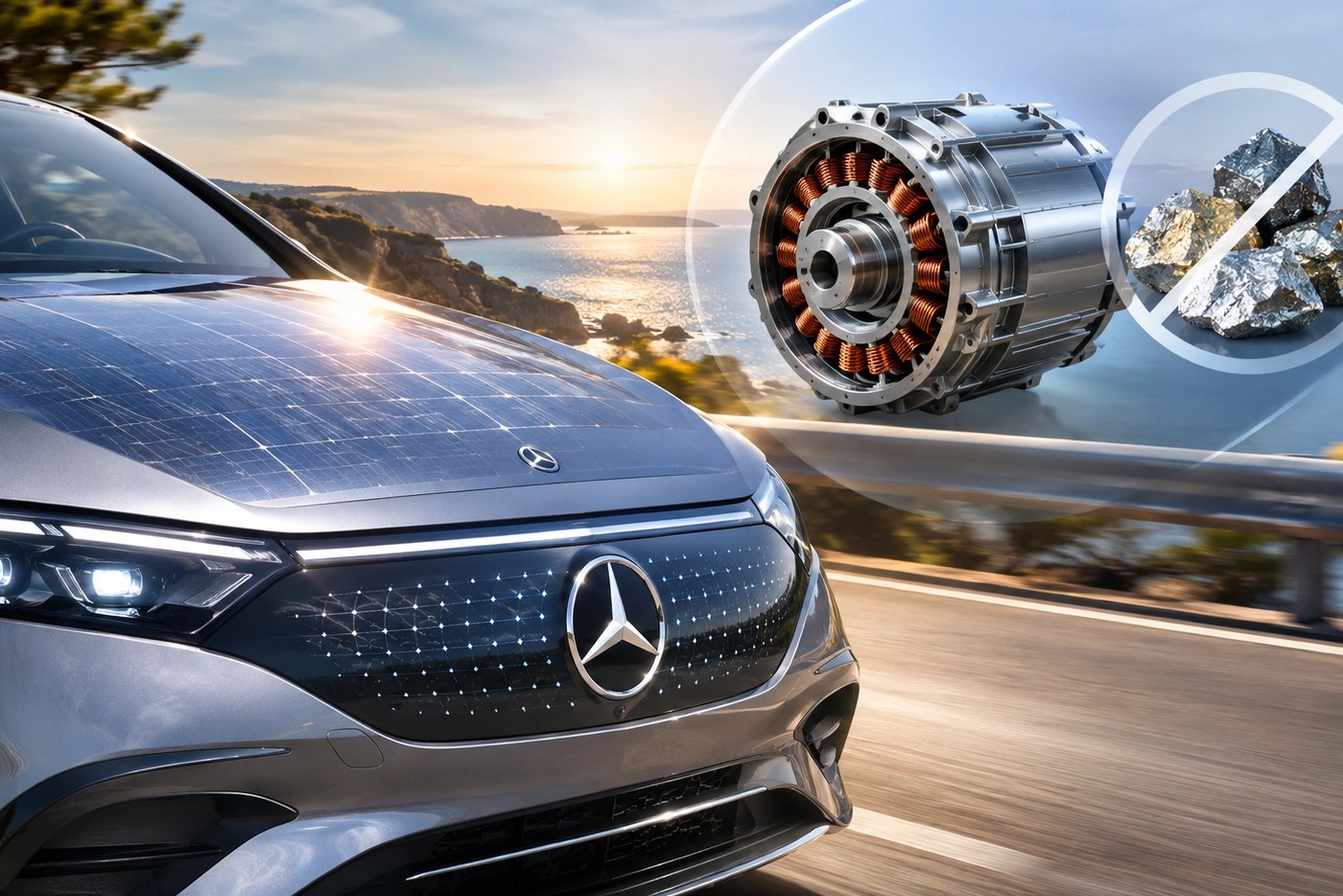
The automotive industry is researching new technologies to reduce its dependence on neodymium and dysprosium, two raw materials used in the permanent magnets of many electric motors. Mercedes-Benz promotes alternatives through its subsidiary YASA and is also working on a photovoltaic coating capable of generating electricity from the bodywork itself.
The transition toward electric mobility presents a new challenge for the automotive industry: reducing reliance on rare earth elements. Elements such as neodymium and dysprosium play a significant role in the production of high-performance permanent magnets, which are used in many electric motors due to their ability to deliver power and efficiency within compact spaces.
However, its extraction and processing present significant environmental and geopolitical challenges. Furthermore, the concentration of supply chains in certain regions of the world exposes manufacturers to potential trade restrictions, price fluctuations and supply problems.
Given this scenario, Mercedes-Benz is pursuing various lines of research to develop technologies that will make it possible to reduce or eliminate the use of these materials.
YASA promotes a new generation of electric motors without rare earths
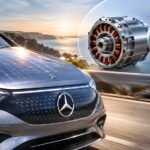
One of the most significant advances comes from YASA, a British company specializing in axial-flux electric motors and a subsidiary of Mercedes-Benz since 2021.
In August 2026, the company announced the launch of Project Resilience, a technology development program supported by funding from the British Government. Its objective is to investigate two alternatives for future electric motors.
The first approach seeks to develop motors that do not require heavy rare-earth elements, such as dysprosium, while retaining permanent magnets and their performance characteristics. The second aims to create motors that are entirely free of rare-earth elements by using alternative architectures.
The challenge is to maintain fundamental characteristics for electric mobility, such as power density, energy efficiency and a compact design, without excessively increasing the weight or size of the propulsion system.
This research is particularly important for high-performance vehicles, where engines need to withstand high temperatures and deliver high power within confined spaces.
A solar paint that generates electricity without using rare earths
Mercedes-Benz’s commitment to reducing reliance on critical raw materials extends beyond engines. The company is also researching an innovative photovoltaic coating known as solar paint.
This technology would allow the integration of a surface capable of capturing solar energy directly on the vehicle body, without the need to install conventional panels.
According to data published by the manufacturer, the photovoltaic modules are just five micrometers thick and weigh approximately 50 grams per square meter. They achieve an efficiency of 20% and can be applied to various exterior surfaces, regardless of their shape or inclination.
Mercedes-Benz estimates that a surface area of about 11 square meters, roughly equivalent to the body of a mid-size SUV, could generate enough electricity to travel up to 12,000 kilometers a year in ideal conditions.
The captured energy could be used directly to power the vehicle or stored in its high-voltage battery.
Another notable aspect is its composition. The brand claims that this solar paint does not use silicon or rare earths and is made from non-toxic and readily available raw materials. In addition, it points out that the material can be recycled and that its manufacture could be considerably cheaper than that of conventional solar modules.
Reduced dependence on critical raw materials for the mobility of the future
The developments by Mercedes-Benz and YASA reflect a change in focus in the automotive industry. Electrification is not only about replacing combustion engines with electric systems, but also about reviewing the materials, manufacturing processes and supply chains that make this transformation possible.
Reducing the use of rare earths can help mitigate certain environmental impacts associated with their extraction and processing, while also improving the security of supply for strategic components.
However, these technologies must still go through different phases of development and industrialization before being extended on a large scale. Research into engines completely free of rare earths and Mercedes-Benz solar paint represent two different paths that point in the same direction: achieving more efficient, innovative and less dependent electric vehicles on critical resources.
The future of sustainable mobility, therefore, also hinges on what happens inside engines and on the materials that coat the vehicle body.