





The transition to an energy system increasingly based on renewable sources poses a fundamental challenge: what to do with energy when more electricity is produced than is needed and how to make it available when demand increases.
The answer lies, among other solutions, in energy storage. And among the available technologies, pumped-storage hydroelectric plants occupy a strategic place.
Spain has extensive experience with this technology and some of the most important pumped storage facilities in Europe. Furthermore, the country is promoting new projects to significantly increase its storage capacity and facilitate the integration of solar and wind energy.
What is a reversible power plant?
A reversible power plant is a facility capable of performing two different operations: generating electricity and storing energy.
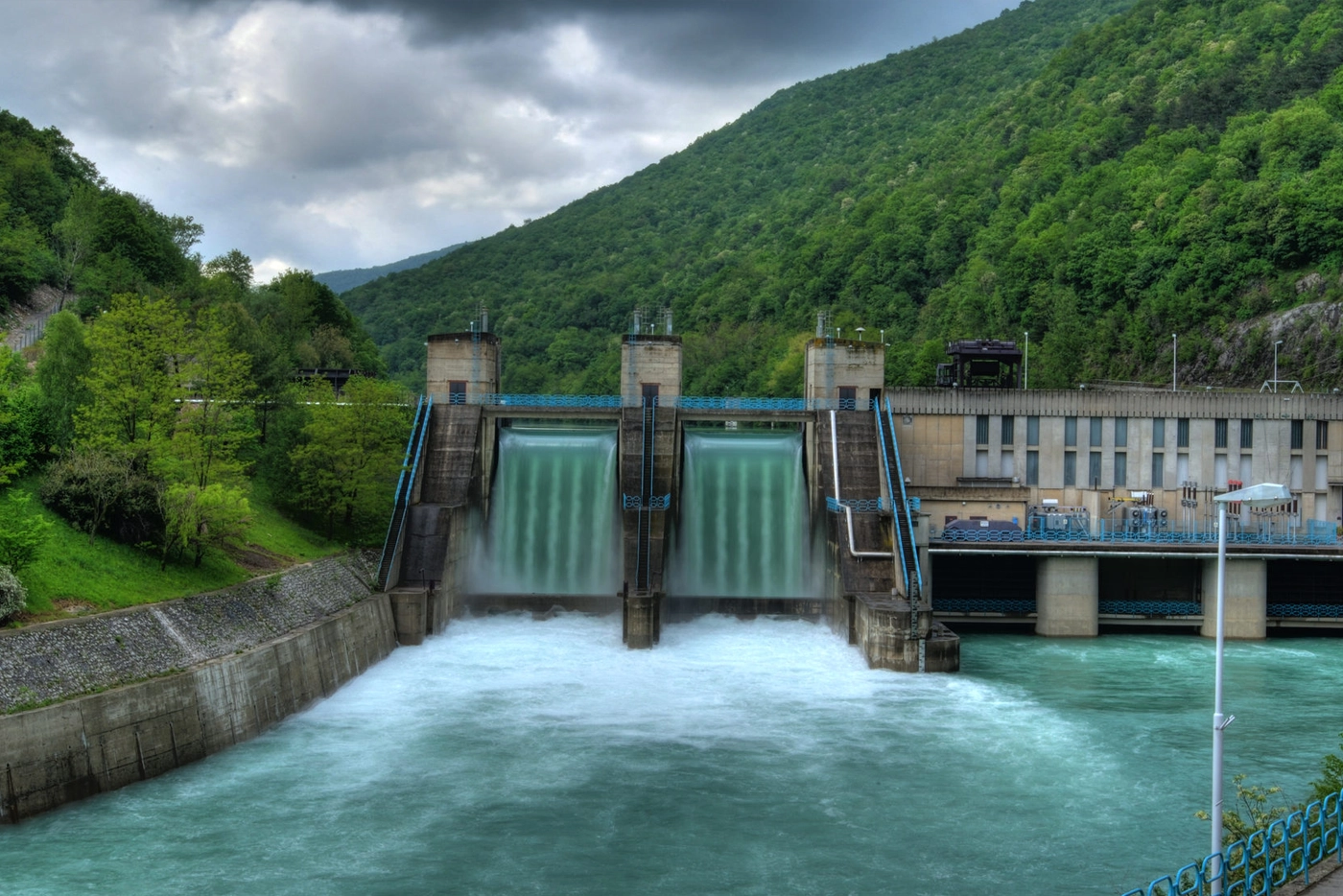
Its operation is typically based on two reservoirs located at different heights. When there is a high availability of electricity and low demand, the system uses that energy to pump water from the lower reservoir to the upper one.
In this way, electricity is transformed into potential energy stored in the water.
When electricity demand increases, the process is reversed. Water flows down from the upper reservoir to the lower one and passes through turbines that generate electricity, which is then fed back into the grid.
That's why it's called a reversible installation: it can consume electricity to store energy and then produce electricity using that stored energy.
Red Eléctrica explains hydraulic pumping precisely as a system based on two reservoirs at different heights, where the water located in the upper reservoir stores potential energy that can later be recovered through turbines.
A huge water battery
Although the concept may seem complex, there is a simple way to understand it: a reversible hydroelectric power plant works like a huge long-lasting battery.
Instead of storing electricity directly in electrochemical batteries, it stores energy using water and the height difference between two reservoirs.
This system represents a particularly important advantage: it can store large amounts of energy for extended periods and return it to the system when needed.
How does a pumped-storage hydroelectric power plant work?
The operation can be divided into two main phases:
1. Pumping: storing energy
When there is a surplus of electricity on the grid, for example during times of high solar or wind power production and lower demand, the power plant uses that electricity to power its pumps.
These pump water from the lower reservoir to the upper one.
Electrical energy is thus converted into gravitational potential energy, which is stored in the water.
2. Turbination: recovering energy
When demand increases or renewable production decreases, the water stored in the upper reservoir is released.
As it descends, it moves the turbines of the power plant and the generators transform the water's energy back into electricity.
The result is a system capable of storing electricity when there is a surplus and returning it to the grid when needed.
Why are they so important for renewable energy?
Solar and wind energy are fundamental to decarbonization, but they have a characteristic that makes having storage systems especially important: their production depends on weather conditions.
Solar panels produce electricity during the hours of solar radiation, while wind turbines depend on the availability of wind.
This can lead to situations where there is a lot of renewable energy production at a given time, and yet little electricity demand.
Without storage, some of that energy may go unused.
Pumped-storage hydroelectric plants allow some of that production to be shifted to another time. For example, solar electricity generated during the middle of the day can be used to pump water to an upper reservoir and then used to recover that energy during the afternoon or evening.
For this reason, pumped hydro storage is a key component for integrating more renewable energy into the electricity system. The National Integrated Energy and Climate Plan (PNIEC) itself points out that pumped-storage hydroelectric plants are especially relevant for a system with a high penetration of renewables thanks to their flexibility, storage capacity, and contribution to system security.
Spain, a European powerhouse in pumped-storage hydroelectric plants
Spain starts from a particularly favorable position.
The country has extensive experience in hydroelectric power generation and has the infrastructure, topography and technical knowledge to develop pumped storage projects.
Currently, Spain has around 6 GW of installed pumped hydro capacity, distributed among various power plants. Furthermore, the National Integrated Energy and Climate Plan (PNIEC) anticipates significant growth in this technology over the coming years.
This experience makes Spain one of the leading European countries in pumped hydroelectric storage.
In fact, Spain is home to the Cortes-La Muela complex in Valencia, considered the largest pumped hydroelectric facility in Europe, with more than 1,700 MW of turbine power.
The importance of these infrastructures increases as renewable energy generation grows and, with it, the need for systems capable of balancing production and demand.
New pumping projects in Spain
The push for hydroelectric storage is not limited to power plants that are already in operation.
In July 2026, the Ministry for Ecological Transition and the Demographic Challenge awarded 165 million euros in aid to seven innovative pumped storage projects.
The projects are located in Andalusia, Asturias, Aragon, Extremadura, Catalonia and Galicia and, together, will add up to 2,071 MW of generation power and 21,091 MWh of storage capacity.
This is a particularly relevant investment because it demonstrates that pumped hydro storage is transitioning from a complementary technology to becoming one of the major storage infrastructures for the future Spanish electricity system.
The call is part of the BORALMAC program, designed to promote innovative energy storage projects using reversible pumping.
Aguayo II: one of the major energy storage projects
One of the projects that best reflects this new stage is Aguayo II, in Cantabria.
The expansion of the Aguayo reversible hydroelectric plant will allow it to reach a turbine power of 1,014 MW and a pumping power of 1,181 MW, according to the administrative authorization published in the BOE.
The project will allow the capacity of the existing facility to be multiplied and increase Spain's capacity to store electricity from renewable sources.
Aguayo II is also an example of how Spain is taking advantage of existing hydroelectric facilities to develop new large-scale storage solutions.
What advantages do reversible power plants have?
The interest in this technology stems from several advantages.
Large-scale storage
Pumped storage plants can store very large amounts of energy, which is essential for managing an electrical system with a high presence of renewables.
Greater integration of solar and wind energy
They allow us to take advantage of surplus renewable energy that might otherwise be lost.
Electrical grid stability
In addition to storing energy, these power plants can contribute to maintaining the stability and flexibility of the electrical system.
Long-term storage
Unlike other technologies that are usually geared towards shorter storage periods, hydraulic pumping can be adapted to different operating needs, from daily cycles to longer periods.
Reduced energy dependence
By facilitating greater integration of indigenous renewable energy sources, hydroelectric storage can help reduce dependence on fossil fuels and energy imports.
Hydraulic pumping and batteries: are they competing technologies?
Batteries and pumped-storage hydroelectric plants do not necessarily have to compete directly.
Both technologies can perform different functions within the electrical system.
Batteries can offer a very fast response and are particularly interesting for certain network services and for smaller-scale installations.
Hydraulic pumping, on the other hand, stands out for its ability to store large amounts of energy for extended periods.
Therefore, the future energy system will likely combine different storage technologies to meet different needs.
Red Eléctrica considers storage to be an essential element for increasing system flexibility, improving security of supply, and maximizing the integration of renewable energies.
The future of energy storage lies in Spain
The expansion of solar and wind energy is transforming the Spanish electricity system. But producing renewable electricity is not enough: it is also necessary to be able to manage, store, and use it at the right time.
In this context, pumped-storage hydroelectric plants acquire a strategic role.
Spain has the experience, infrastructure, and natural resources that place it among the leading European countries in this technology. And the implementation of new projects, along with public investments in pumped storage, suggests that its importance will continue to grow in the coming years.
The ultimate goal is to achieve a more flexible electrical system capable of making the most of the energy produced by the sun and wind.
Reversible power plants can thus become one of the great batteries of the Spanish energy transition: facilities capable of storing today's renewable surplus to convert it into electricity when the system really needs it.