






A new power plant will supply heating to 7,000 homes.
The government of Castile and León has put out to tender the construction of a biomass power plant, valued at €18.3 million, which will be the heart of Segovia's future sustainable district heating network. The project will supply heating and hot water to thousands of homes and buildings in the city and will contribute to reducing CO₂ emissions.
Segovia is moving forward with its commitment to a more efficient and sustainable urban heating model. The government of Castile and León has put out to tender the construction of a new biomass power plant that will supply the city's future heating network, a project representing an investment of €18.3 million.
The facility will play a central role in a system designed to produce and distribute heat jointly, using sustainable forest biomass as fuel. The goal is to reduce dependence on fossil fuels, improve energy efficiency, and move towards a heating model with a lower environmental impact.
A 28.4 MW biomass power plant
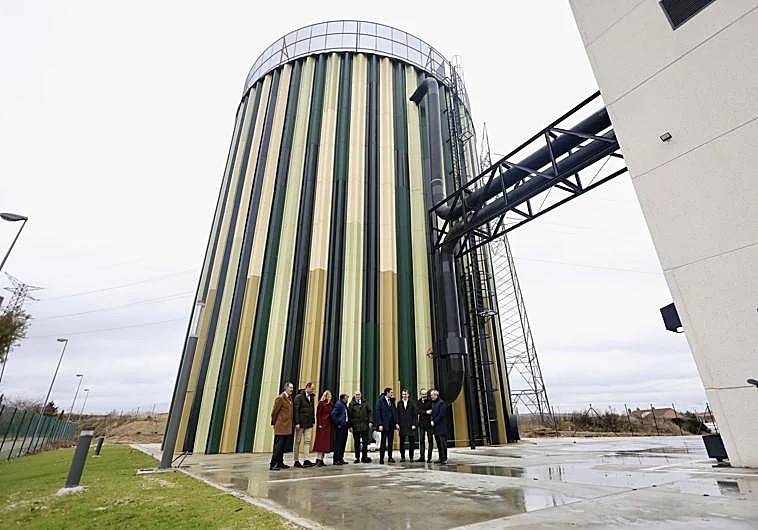
The future facility will have a nominal thermal power of 28.4 megawatts (MW) and will be equipped with three state-of-the-art biomass boilers.
The plant is expected to use approximately 30,000 tons of sustainable wood chips annually, sourced from forest resources. It will have the capacity to generate up to 75 million kWh of thermal energy per year.
In addition to heat production using biomass, the project will incorporate solutions aimed at improving the efficiency of the installation, including a 3,500 cubic meter thermal storage tank, remote management systems and a photovoltaic solar installation for self-consumption.
What is an urban heat network?
A district heating network allows for the centralization of thermal energy production and subsequent distribution of hot water through a network of pipes to connected buildings.
Instead of each building having to individually produce its heating and hot water, a central facility generates the heat and distributes it to the users.
This model can provide significant advantages in terms of energy efficiency, maintenance and management of facilities, especially when thermal production uses renewable sources such as biomass.
26 kilometers of network to distribute heating
The plant will be just one part of a larger project. Segovia's future district heating network will be approximately 26 kilometers long and will connect different areas of the city.
The neighborhoods slated for installation include Santo Tomás, Cristo del Mercado, Santa Eulalia, San José, and La Albuera. Currently, the network deployment is in the licensing and permitting phase.
The system will provide heating and hot water to approximately 7,000 homes and 40 buildings in the tertiary sector, centralizing thermal production and simplifying some of the maintenance needs of the connected properties.
Biomass as an alternative to reduce emissions
One of the main objectives of the project is to reduce the environmental impact associated with building air conditioning.
According to the project's projections, the new district heating network could prevent approximately 19,600 tons of CO₂ emissions per year in Segovia. This reduction would be linked both to the use of biomass as an energy source and to the centralization and optimization of heat production.
The choice of sustainable wood chips also connects the project to the use of forest resources in Castile and León. The use of locally sourced biomass can also contribute to generating economic activity related to forest management, fuel supply, and forest maintenance.
An investment that also seeks to revitalize rural areas
Beyond the production of thermal energy, the project has an economic dimension linked to the territory.
The use of regional forest resources can promote activities related to forest management, biomass utilization, and the supply of wood chips, generating opportunities for companies and workers linked to the forestry sector.
In this way, biomass-fueled heating networks can become a tool that combines energy transition, circular economy and sustainable use of natural resources.
When will the Segovia biomass power plant be finished?
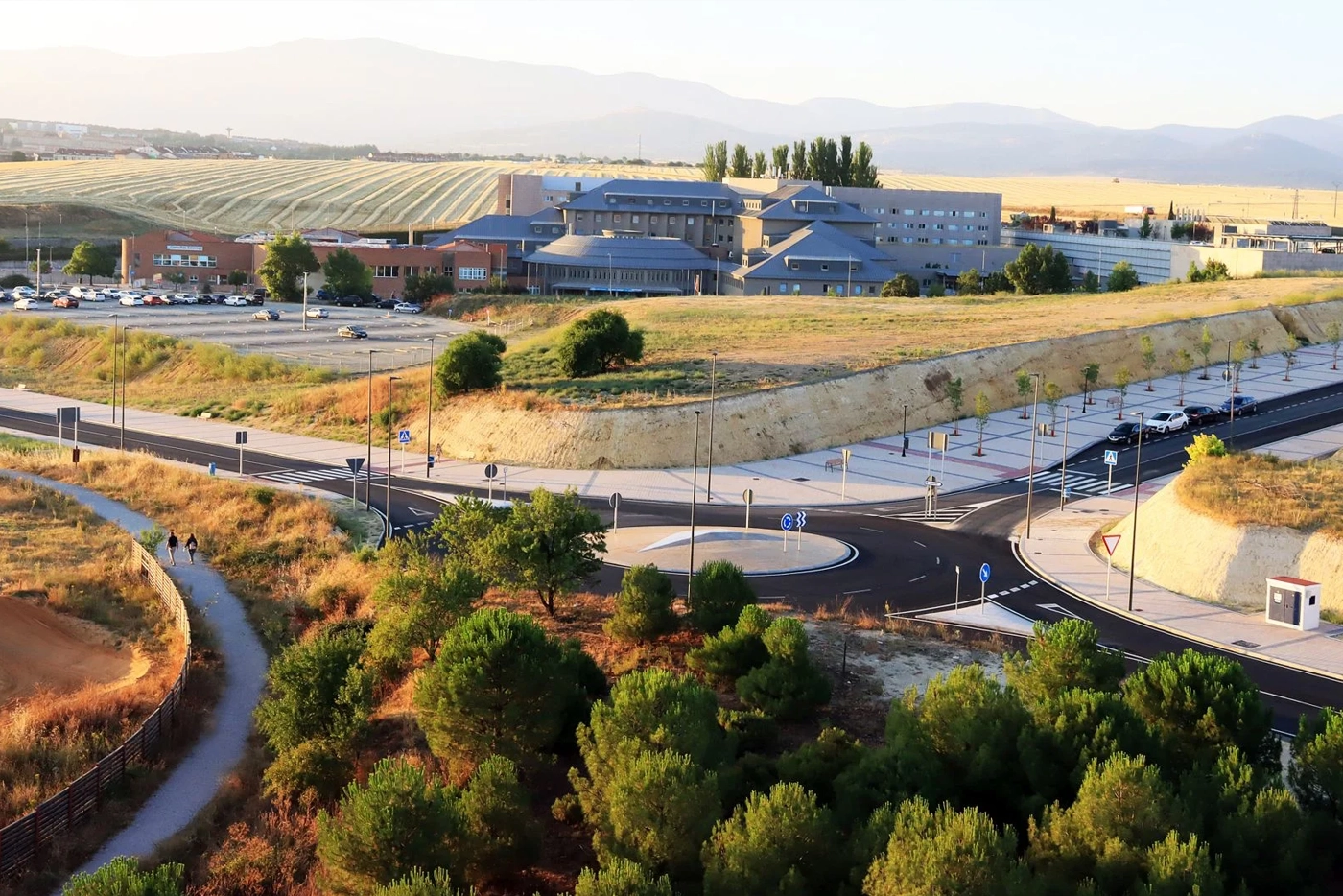
Construction of the power plant is expected to take 22 months from its commencement. The facility will be built on a 5,806-square-meter plot of land linked to the regional expansion plan for the Segovia Healthcare Complex, of which approximately 3,514 square meters will be dedicated to the power plant itself.
The implementation of the infrastructure must also be coordinated with the development of the urban distribution network, which is currently pending completion of the corresponding administrative procedures.
Biomass and district heating networks: a growing trend
The Segovia project is part of a growing trend towards the development of renewable heat networks in Spain.
This type of infrastructure can be particularly beneficial in cities and urban areas with a high concentration of housing, public buildings, and service sector establishments. By centralizing thermal generation, renewable technologies and storage systems can be integrated, which would be more difficult to implement individually in each building.
The combination of biomass, photovoltaic solar energy, thermal storage and remote management systems planned for Segovia precisely reflects this evolution towards more integrated and efficient urban heating systems.
One more step towards sustainable district heating
The future biomass power plant in Segovia represents an investment of 18.3 million euros and is part of a larger energy project, with a distribution network of about 26 kilometers.
When fully operational, the system will provide heating and hot water to approximately 7,000 homes and 40 buildings, using sustainable forest biomass as one of its main energy resources.
With a production capacity of up to 75 million kWh of thermal energy per year and an estimated reduction of 19,600 tons of CO₂ annually, the project puts Segovia on the path towards an urban heating model based on renewable energy and greater energy efficiency.