




The global expansion of solar and wind power is reaching record levels, but electricity grids are not growing at the same pace. The result is a new challenge for the energy transition: more and more renewable electricity is available, but it cannot reach where it is needed.
For years, one of the main challenges for renewable energy has been increasing its generation capacity and reducing its costs. Now, the scenario is changing. With the expansion of solar and wind power worldwide, the problem is shifting: electrical grids need sufficient capacity to transport and manage all that energy.
A recent Reuters analysis focuses on China, where clean electricity production was limited by approximately 360 TWh during the first six months of 2026 due to grid constraints. This amount is roughly equivalent to Mexico's annual electricity consumption.
The phenomenon, known as curtailment or renewable energy spillover, is not unique to China. Australia, Japan, and India are also experiencing similar problems as renewable generation increases and electrical infrastructure lags behind.
What happens when the grid cannot absorb all the renewable energy?
Electricity has one fundamental characteristic: it must be produced and consumed at virtually the same time, unless it can be stored.
When a solar or wind power plant is producing electricity but the grid does not have the capacity to transport it or the demand is not sufficient, operators may be forced to reduce that generation.
This is known as energy curtailment.
The problem can arise, for example, in regions with a huge concentration of solar or wind farms and an insufficient grid to transport that electricity to large consumption centers.
This creates a paradox: while new renewable facilities continue to be built, some of the clean electricity they produce may end up going unused.
China, the most obvious example
China is at the center of this situation due to the extraordinary speed with which it has developed its renewable capacity.
The country has enormous solar and wind power installations, especially in regions far from major urban and industrial centers. The challenge now is to transport that electricity to the areas where demand is greatest.
According to the analysis published by Reuters, estimates from independent organizations indicate that the volume of limited renewable energy in China during the first half of 2026 was significantly higher than that recorded in the same period of the previous year.
The Chinese case is particularly relevant because it demonstrates that installing more solar panels and wind turbines is not enough. The energy transition also requires a profound transformation of the electricity grid.
A problem that is already spreading throughout the world
China is not an isolated case.
In India, for example, delays in new transmission infrastructure are causing some of the recently installed renewable capacity to struggle to integrate into the grid. An ICRA analysis estimates that roughly one-third of the country's new renewable capacity is exposed to grid constraints.
Japan and Australia are also experiencing an increase in renewable energy spillovers, while other advanced markets are beginning to face similar problems.
The International Energy Agency (IEA) estimates that there are currently more than 2,500 GW of renewable energy, storage and large electricity consumer projects waiting to be connected to the grids worldwide.
The figure highlights the magnitude of the challenge: there are a huge number of projects ready to produce or consume electricity, but the necessary infrastructure to connect them is not yet available.
Batteries become a key component
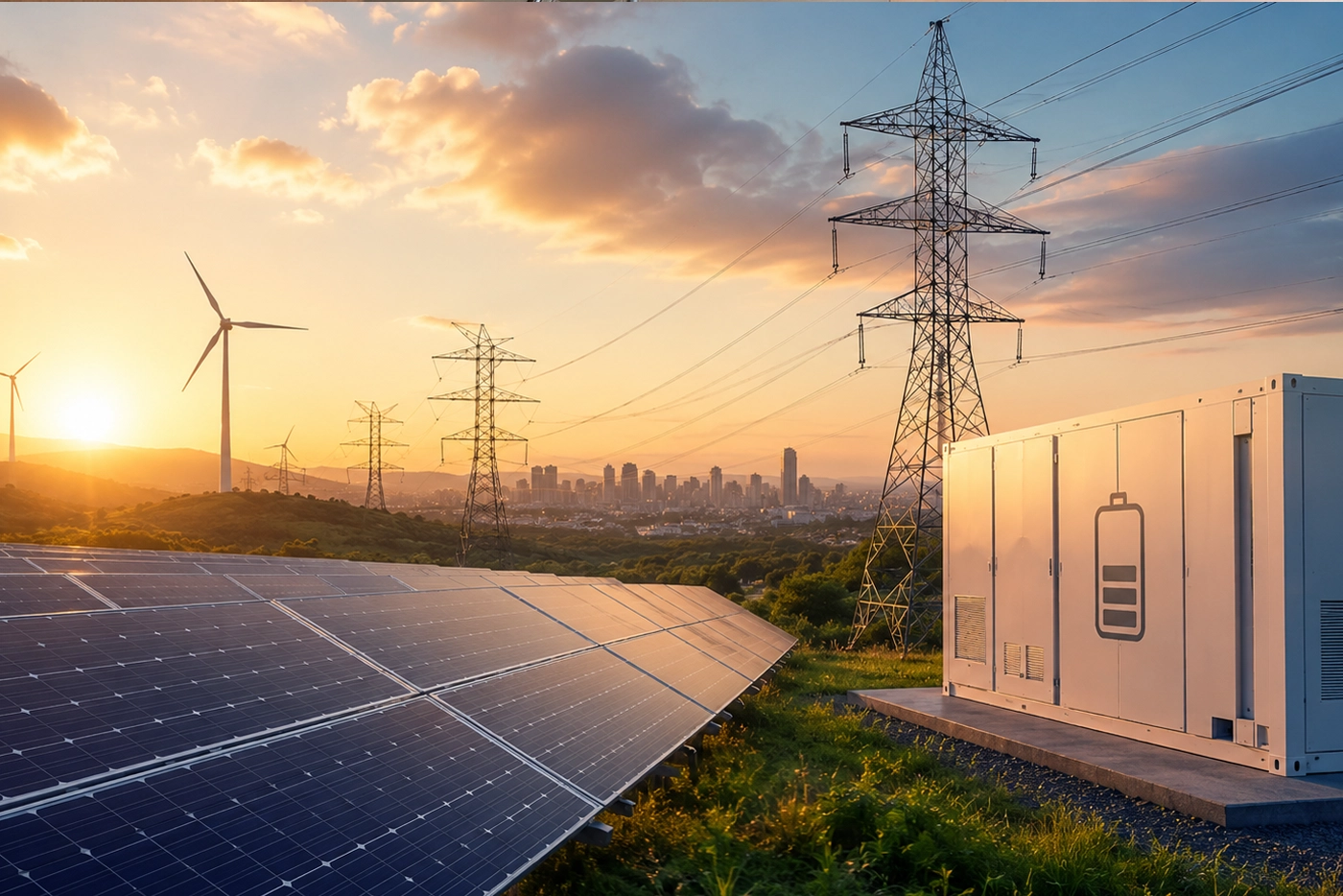
One of the main solutions involves increasing energy storage capacity.
Batteries allow electricity to be stored when there is excess production — for example, during peak solar generation hours — and returned to the grid when demand increases.
In this way, storage can reduce spills and make renewable energies much more flexible.
The growth of energy storage is particularly rapid in markets such as China, the United States, Australia, India, and Chile. The goal is no longer simply to build solar and wind farms, but to combine these installations with batteries to create systems capable of producing and managing electricity more flexibly.
It will also be necessary to modernize the electricity grids.
Batteries, however, do not solve the problem on their own.
The expansion of renewable energy also requires new transmission lines, smarter distribution networks, demand management systems, and greater interconnection between regions and countries.
The IEA considers accelerating the construction and modernization of networks to be one of the priorities of the new electrical era.
This represents a huge investment, but it also opens up new opportunities for sectors related to storage, digitalization, electrification, and smart energy management.
The challenge of renewables is changing its scenario
The current situation reflects the extent to which the energy transition has evolved.
A few years ago, the main concern was making solar and wind power competitive with fossil fuels. Today, in many markets, the question is becoming how to integrate ever-increasing amounts of renewable electricity into electrical systems designed for a very different reality.
The solution does not necessarily lie in producing less renewable energy, but in building a system capable of making better use of it.
More grids, more storage, greater interconnection, and smarter demand management will be key elements to prevent the growth of clean energy from creating a new bottleneck.
The energy transition, therefore, is entering a new stage: the challenge is no longer just to produce clean energy, but to ensure that it reaches where and when it is needed.