






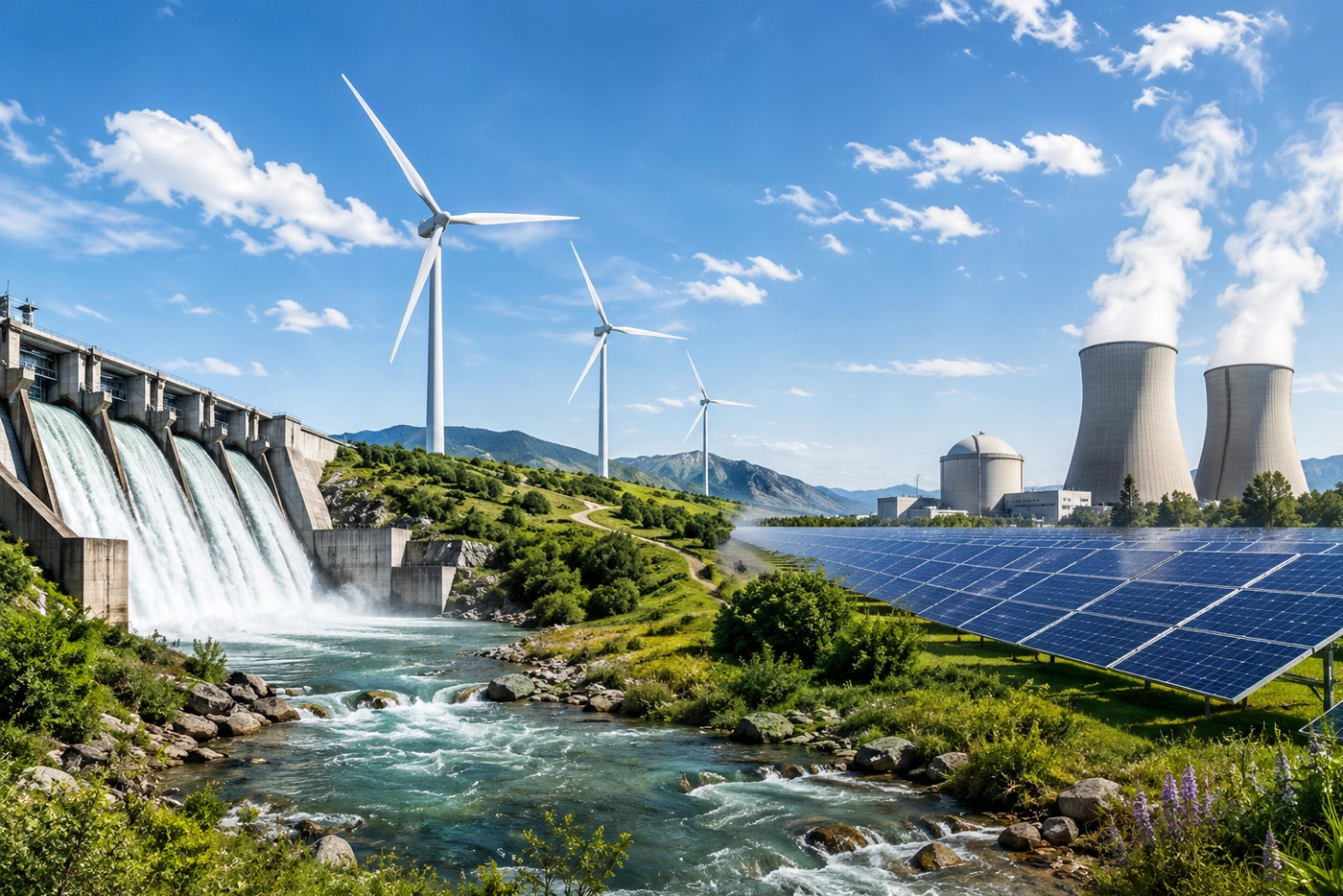
We will now review the energy sources available on the market and analyze them from the point of view of their energy efficiency (EROI, Energy Return on Investment) and their waste or impact on the atmosphere
Fossil fuels
First we have fossil fuels:
- Coal
- Oil
- Gas
- And Uranium (Nuclear)
All these energies are characterized as being fossil fuels, that is: they are raw materials that originated millions of years ago through geotechnical solar processes and must be extracted from the subsoil with a high environmental impact.
Furthermore, with the exception of nuclear energy, the rest generate many CO2 emissions, especially coal.
Fossil fuels (coal, oil, uranium, and natural gas) are non-renewable resources formed from organic matter that has decomposed over millions of years. They account for more than 80% of global energy and are primarily used for transportation, electricity generation, and heating.
The global emissions CO2 emissions from fossil fuels have reached record highs, hovering around 38.1 billion tons annually. This data is key to understanding the current climate crisis. Burning fossil fuels for electricity, transportation, and industry is the main driver of climate change.
The use of fossil fuels (coal, oil, and natural gas) generates most of the world's greenhouse gas emissions. When these hydrocarbons are burned, carbon stored for millions of years is released into the atmosphere as carbon dioxide (CO2), disrupting the planet's natural balance.
In contrast, nuclear energy does not generate any emissions but presents the problem of nuclear waste and its storage, which lasts for hundreds of years.
Energy Return on Investment (EROI)
The ERO (Energy Return on Investment) measures the efficiency of an energy source, calculating how much useful energy is obtained for each unit of energy invested in its production.
Oil
Historically, oil has been a highly efficient energy source. At the beginning of the 20th century, easy crude oil extraction had a very high EROI (close to 100:1). However, as traditional fields are depleted and more complex sources are used (such as oil sands, fracking, or deep-water drilling), the energy expenditure for extraction increases. It is estimated that the current global EROI for oil is between 11:1 and 30:1, which still makes it viable, but with a long-term downward trend.
Coal
Historically, coal has been one of the most profitable energy sources, due to its high energy density and the fact that for decades it was extracted from easily accessible surface deposits.
Typical EROI values for coal vary depending on the quality of the deposit and the extraction techniques:
- High-quality coal (bituminous coal/anthracite): Its EROI (Energy Return on Investment) averages between 20:1 and 46:1. This means that for every unit of energy invested in extracting and processing it, between 20 and 46 units of useful energy are obtained.
- Low quality coal (lignite/peat): Its ERV is lower, ranging from 2:1 to 7:1.
Natural gas
The Energy Return on Investment (EROI) for natural gas averages between 5 and 6 units of useful energy obtained for every unit invested in its extraction and processing. This index measures the efficiency of this resource as a net energy source.
The TRE varies depending on the ease of extraction:
- Conventional gas: Can reach a ratio of up to 10:1 in highly pressurized wells.
- Unconventional gas (fracturing, fracking (in English): It falls to values close to 1:1 or 5:1, due to the high energy consumption required for hydraulic fracturing and horizontal drilling.
Nuclear
The Energy Return on Investment (EROI) for nuclear power is typically between 10 and 15 units of useful energy obtained for every unit invested. This calculation includes the cost of uranium mining, refining, power plant construction, and maintenance.
Emissions distribution by fuel
Emissions vary significantly depending on the energy source used to generate a given amount of heat or electricity:
- Coal It is the most carbon-intensive fuel. Generating electricity with coal emits more CO2 than oil or natural gas.
- Oil Primarily used in transportation, its emissions continue to rise due to the slow transition to electric vehicles.
- Natural gas Although it is considered the "cleanest" of the fossil fuels, the combustion of natural gas still releases massive amounts of CO2 in addition to other pollutants.
- Nuclear zero emissions.
Renewable energies
Renewable energies are inexhaustible sources of seemingly clean and reusable energy:
- Solar
- Wind
- And hydraulics
They regenerate naturally. They are the cornerstone of the ecological transition because they do not emit greenhouse gases, thus drastically reducing the carbon footprint and environmental impact.
The use of these sources fundamentally reduces the costs of the electricity system and dependence on fossil fuels.
However, renewable energies are not as clean or efficient as they seem, and we must pay special attention to the problem of the waste they leave on the surface when they need to be disposed of.
Energy return on investment
Solar energy: Presents an ERV of values between 5 and 20 units of energy returned for each unit invested, depending on your geographical location.
Wind energy: The Energy Return on Investment (EROI) of wind energy generally ranges between 20 and 80 (that is, for every unit of energy invested, between 20 and 80 units of useful energy are obtained). This metric varies depending on the size of the turbine and the wind speed, making it one of the most efficient renewable energy sources.
Hydropower: It has the highest Energy Return on Investment (EROI) in the renewable energy sector. For every unit of energy invested in building the infrastructure and operating the plant, hydroelectric power returns between 50 and 250 useful energy units.
At the level of conversion efficiency.The process of transforming the potential energy of water into electricity is very efficient, reaching efficiencies of between 90% and 95%. Unlike other renewable generation technologies, hydroelectric projects stand out for their high storage capacity and long-term durability.
Waste
Here, renewable energies fare poorly, except for hydroelectric power.
The solar panels: They have a lifespan of 25 to 30 years and are composed primarily of glass, aluminum, silicon, and copper. After their lifecycle, they are managed through thermal, mechanical, and chemical processes that recover up to 95% of these materials for the circular economy.
The management of this photovoltaic waste is structured around the following key points:
- Composition: A standard panel is composed of 75% glass, 10% plastic, 8% aluminum, 5% silicon, and 1% copper and precious metals such as silver.
- Recycling process: The aluminum frame is removed and the panel is crushed or heated to high temperatures (up to 500°C) to separate and recover the glass, silicon and valuable metals.
- Regulations in the European Union: Recycling these modules is mandatory, and manufacturers must take responsibility for their collection and treatment at the end of their useful life.
Regarding the wind energy:Between 85% and 90% of the weight of a wind turbine (tower steel, copper, foundations) is easily recycled. The biggest challenge lies with the blades, composed of fiberglass/carbon fiber and resins. To give them a second life, processes such as are used. pyrolysis, solvolysis or co-processing in cement plants.
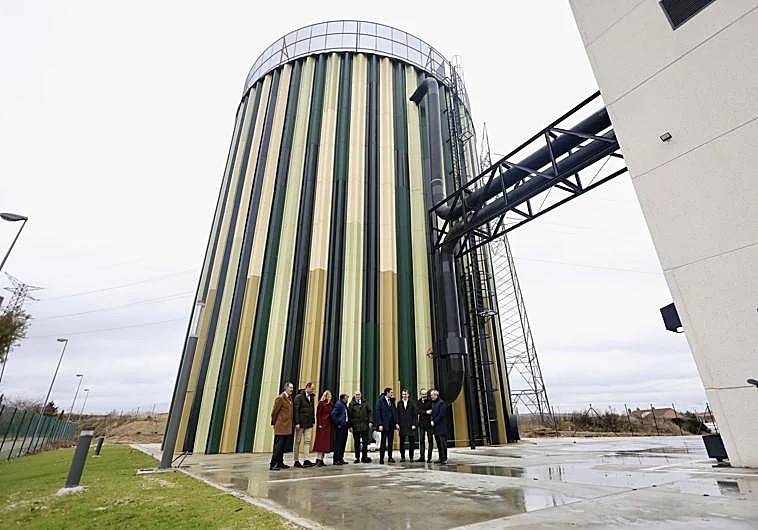
Some countries, such as Spain, a leader in renewable energy, have strongly promoted the circular economy in this sector. The plant stands out in the region. Energy Loop in Navarre (promoted by Iberdrola) and the project Waste to Fiber (Acciona), designed to crush, treat and recover these composite materials.
Hydraulics
It could be said that hydroelectric power generates ZERO waste, if we disregard the fact that dam construction requires enormous quantities of concrete and that large areas of land are submerged. However, a hydroelectric plant can last for hundreds of years.
However, as engineer Don Antonio Turiel from the Autonomous University of Madrid explains, renewable energies are dispersed and intermittent, which implies serious limitations to becoming exclusively dependent on them; all this, Mr. Turiel insists, should necessarily lead us to implement all kinds of energy-saving measures in homes, hotels and businesses and, especially, water-saving measures in order to maintain our current standard of living.
From all of this, we can conclude that the cleanest and most efficient energy sources are probably hydroelectric and nuclear, followed by wind and then solar. But, without a doubt, the cleanest energy in the world is that which is not consumed or wasted.